


Most cats need about 3.5 to 4.5 ounces of water per 5 pounds of body weight each day, though cats eating wet food typically need less to drink since their food already contains significant moisture. At Blue Mountain Animal Clinic in Sequim, “How much water do cats need?” is one of the questions we hear most often, especially from owners wondering whether their cat is drinking enough or too much. Cats aren’t always great about drinking enough water on their own, which is part of why understanding exactly how much water cats need and helping them get there matters for long-term health, particularly urinary and kidney health.
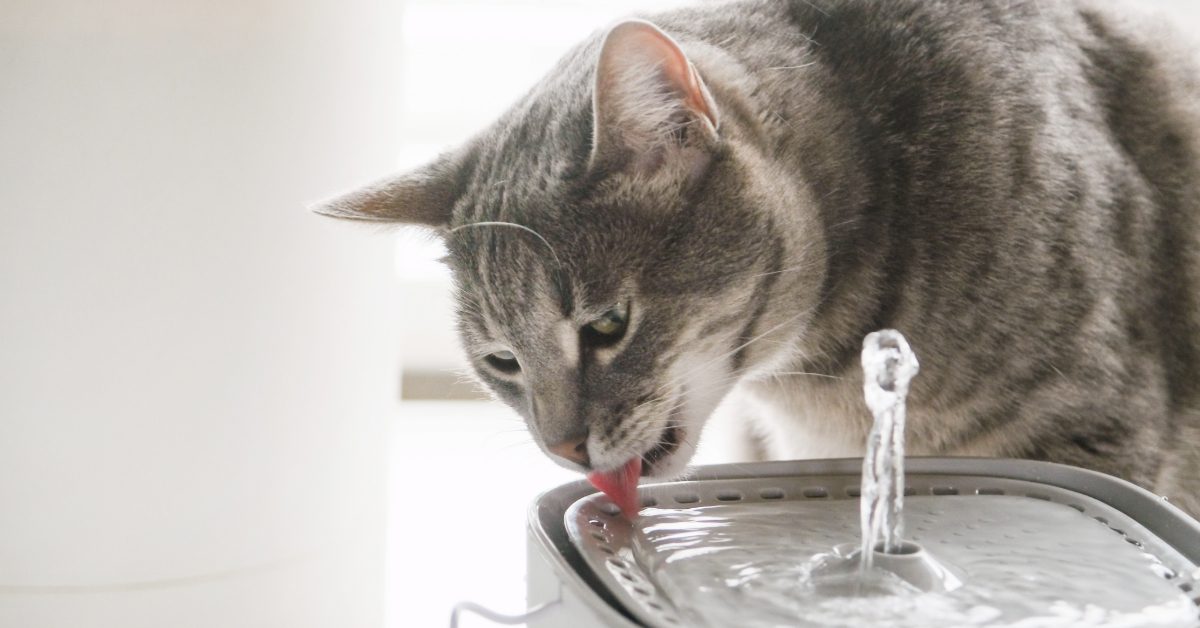
How Much Water Should a Cat Drink Each Day?
As a general rule, cats need roughly 3.5 to 4.5 ounces of water per 5 pounds of body weight daily, which works out to a little over half a cup of water for an average 10-pound cat. This baseline is the simplest answer to how much water cats need, and it includes both water your cat drinks directly and moisture consumed through food.
Wet Food vs. Dry Food and Water Intake
Wet cat food is typically 70–80% moisture, while dry kibble contains only about 10%. This means how much water a cat needs to drink from a bowl depends heavily on diet: cats on a wet food diet naturally consume much of their daily water needs through meals, while cats eating primarily dry food need to drink significantly more from a bowl or fountain to stay properly hydrated.
Does Age or Activity Level Change Water Needs?
How much water cats need isn’t a fixed number across every life stage. Kittens and highly active cats generally need proportionally more water relative to their size, since their metabolisms run faster. Senior cats, especially those with early kidney changes, often need more water too, even though they may naturally drink less due to reduced thirst drive or mobility issues that make reaching the water bowl less appealing.
Why Is Cat Water Intake So Important?
Cats evolved from desert-dwelling ancestors, which is part of why they have a naturally low thirst drive compared to other pets. Unfortunately, this instinct doesn’t always match how much water cats actually need, particularly for indoor cats eating dry food, which puts them at higher risk for urinary and kidney issues over time. Below are reasons water intake is so important for cats:
- Proper hydration supports kidney function
- Adequate water intake reduces the risk of urinary crystals and blockages
- Hydration supports healthy digestion
- Water helps regulate body temperature
The Link Between Water Intake and Urinary Health
Cats that don’t get how much water they need tend to produce more concentrated urine, which creates a favorable environment for crystal and stone formation in the bladder. This is one of the main reasons veterinarians pay close attention to daily water intake, especially in male cats, who are more prone to potentially life-threatening urinary blockages tied to dehydration and diet.
How Can I Tell If My Cat Isn’t Drinking Enough?
Mild dehydration can be subtle in cats, but a few simple checks at home can help you gauge whether your cat is getting how much water they need. Gently lift the skin between your cat’s shoulder blades. In a well-hydrated cat, it should snap back quickly. Sluggish, tented skin can indicate dehydration. Sunken eyes, dry gums, and lethargy are other signs worth watching for.
Signs of Insufficient Water Intake
Beyond the skin test, watch for reduced urination, small or infrequent urine clumps in the litter box, dry or tacky gums, and general lethargy. Any combination of these signs is worth a call to Blue Mountain Animal Clinic, since it may mean your cat isn’t getting how much water they need on their own.
Tracking Water Intake at Home
If you’re trying to figure out how much water your cat needs day to day, measuring the water you put out at the start of the day and checking how much is left in the evening can give you a rough baseline. This is especially useful in multi-cat households, where it’s harder to know exactly how much any one cat is drinking on their own.
How Can I Encourage My Cat to Drink More Water?
Cats can be surprisingly particular about how and where they drink, which can make it harder for them to reach how much water they actually need in a day. A few simple changes often make a noticeable difference in daily water intake:
- Use a pet water fountain, since many cats prefer moving water
- Place multiple water bowls throughout the house, away from food and litter boxes
- Choose wide, shallow bowls that don’t touch a cat’s sensitive whiskers
- Add a portion of wet food to your cat’s diet
- Keep water fresh and change it daily
Why Bowl Placement and Style Matter
Cats instinctively avoid drinking too close to their food or litter box in the wild, a habit that carries over into home environments. Placing water bowls in a few separate, quiet locations often encourages more frequent drinking and helps cats reach how much water they need without even thinking about it.
Other Simple Tricks Cats Respond To
Some cats drink more from glass or ceramic bowls than plastic ones, possibly because plastic can hold onto odors that cats find off-putting. Adding a splash of low-sodium broth to water, or even offering ice cubes as a novelty in warmer months, can also help a reluctant drinker get closer to how much water they need each day.
When Should I Be Concerned About My Cat’s Water Intake?
Both too little and too much water can be a red flag, and a sudden shift in how much water your cat needs or seems to want is worth paying attention to. A cat drinking noticeably more than usual for several days could be showing early signs of diabetes, kidney disease, or hyperthyroidism, while a cat drinking too little is at higher risk of dehydration and urinary issues. Either pattern is worth mentioning at your cat’s next visit, or sooner if other symptoms are present.
What Your Veterinarian Can Check
Bloodwork and a urinalysis can assess kidney function, hydration status, and rule out underlying conditions affecting how much water your cat needs day to day. These are often part of a standard wellness exam, especially for senior cats, and can catch changes in water needs well before more obvious symptoms appear.
Keeping Your Cat Hydrated in Sequim
Understanding how much water cats need and actually helping them get there is one of the simpler ways to support long-term health, especially for urinary and kidney function. If you’re still unsure how much water your cat needs or you’re concerned about their intake in either direction, schedule an appointment with us by calling (360) 457-3842, so our team at Blue Mountain Animal Clinic in Sequim can help figure out what’s normal for your cat.