


A little prep goes a long way — especially for cats. Here's how to make appointment day easier, plus what to know if your pet is coming in for surgery or a dental procedure.
Can't find your pet the morning of? Please call us before you cancel — we'd rather help you troubleshoot or find a new time than lose the visit altogether.
Before You Head Out
Keep the following instructions and tips in mind when prepping for your pet’s appointment.
Secure Transport
Secure dogs on a standard (non-retractable) leash or harness and put cats and small pets in a carrier — even the calm ones. Retractable leashes give dogs too much extra room to lunge, wander into other pets' space, or get tangled in our lobby, so please leave those at home. Clinics are full of new smells, sounds, pets, and people, so keeping everyone secured and close helps the visit go smoothly for all.
Bring the Essentials
Bring current medications, a list of questions, and any paperwork from another vet if this is a first visit with us.
Arrive a Few Minutes Early
It gives everyone a chance to settle in before the exam instead of rushing in and feeling stressed.
Fasting Instructions
If we asked you to withhold food or water, please follow those times closely — it matters for safety, especially with sedation.
For Cat Owners: Catching Kitty Without the Chase
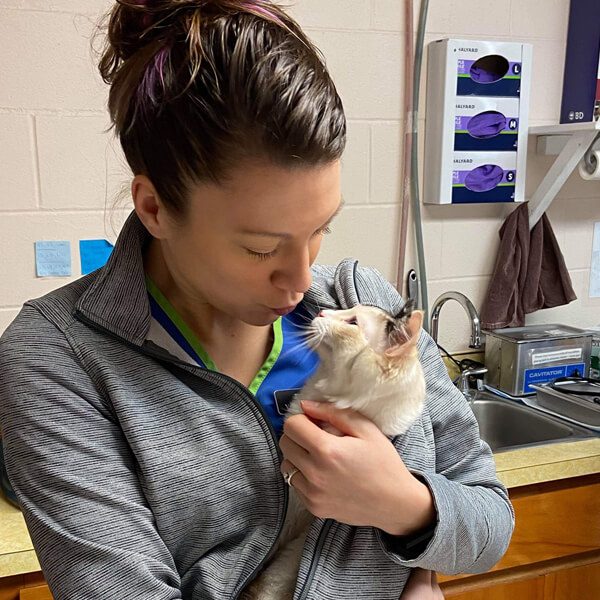

Most last-minute cat cancellations happen because the cat saw the carrier, panicked, and disappeared. These steps — based on Fear Free® principles for reducing pet stress — help avoid that entirely.
- Make the carrier part of the furniture. This is the single most effective thing you can do, and it's the approach recommended by Fear Free® — a program focused on reducing fear, anxiety, and stress for pets at the vet. The idea is simple: if the carrier only appears right before a stressful car ride, your cat learns to fear the carrier itself. Change that association early, and the rest of the day gets a lot easier.
- Leave it out, always. Keep the carrier set up in a room your cat already spends time in — not tucked in a closet and pulled out the morning of a trip. Cats do best when the carrier is just another piece of furniture, not a signal that something's about to happen.
- Line it with something familiar. A blanket or bedding with your cat's scent on it makes the inside feel like their space, not a trap.
- Build up with treats, in stages. Start by tossing treats near the carrier. Once your cat is comfortable there, move treats just inside the doorway, then further in, then all the way to the back. Let your cat set the pace — if they hesitate, go back a step rather than pushing forward.
- Practice closing the door briefly. Once your cat will walk in on their own for a treat, try closing the door for a few seconds while they eat, then open it right back up. Gradually stretch that time out over several sessions.
- Take a few short "practice runs." A brief carrier ride around the block that doesn't end at the vet helps your cat learn that the carrier doesn't always mean something stressful is coming.
A cat that's carrier-trained this way is far less likely to bolt or hide on appointment morning, because by then, the carrier isn't scary. It's just where the good treats happen to be.
Limit your cat’s hiding spots so you can find them easier if they make a run for it.
- Close your cat into a smaller room (bathroom, laundry room) a bit before you need to leave, rather than hunting through the whole house.
- Close blinds and keep the room quiet — a calm room makes for a calmer cat.
- If you use a calming spray or pheromone diffuser, this is the time to use it on the carrier.
Move slowly and skip the chase.
- A chase spikes adrenaline and makes cats harder to handle for hours afterward — approach slowly and low instead.
- For a top-load carrier, lowering your cat in from above is often easier than pushing them through a front door.
- Draping a towel over your cat before lifting them (a "kitty burrito") can help skittish cats feel secure rather than exposed.
Drape a light towel over the carrier for the car ride and in the lobby. Less visual stimulation usually means a quieter cat by the time you reach the exam room.
It happens more than you'd think. Call the clinic — we can often work you in later that day, talk through a calming plan for next time, or send home something to help for future visits. A phone call keeps your pet's care on track; a no-show just pushes the problem down the road.
If Your Pet Was Prescribed Pre-Visit Medication
We send some pets home with medication ahead of a visit — the specifics depend on whether it's a routine appointment or a surgery/dental procedure. Here's what to expect for each.
For Routine Appointments
If your pet gets especially anxious at the vet, we may prescribe gabapentin and/or trazodone to take the edge off before the visit.
Night Before — First Dose
Give the dose sent home with your pet the evening before the appointment, as directed on the label.
2 Hours Prior — Second Dose
Give the second dose about 2 hours before you need to leave, so it has time to take effect before the carrier comes out.
Please give both doses exactly as written on your pet's label — the amount and timing are set for your individual pet.
A little grogginess, wobbliness, or extra sleepiness is normal and expected. Keep your pet somewhere safe and supervised (away from stairs, and indoors only for cats) between doses and on the way in. Pairing these medications with the carrier-training tips above works best — a pet who's both calm and comfortable with the carrier has the easiest time. If you have questions about timing or your pet seems unusually affected, please call us.
For Surgery or Dental Procedures
For pets having surgery or a dental procedure, we send home a small pre-anesthetic care pack a day or two ahead of time. Here's what's typically in it and why.
Anti-Nausea — Maropitant
Helps settle the stomach before anesthesia, which can reduce nausea, drooling, and vomiting around the procedure.
Calming — Trazodone
A gentle anti-anxiety medication that takes the edge off car rides and the clinic environment.
Calming — Gabapentin
Also used for anxiety and mild sedation — often makes handling and carrier time noticeably easier.
Please give these exactly as written on the label sent home with your pack — the dose and timing are set for your individual pet.
A calmer pet at drop-off is a safer anesthesia candidate, so these medications aren't optional extras — they're part of the plan. If a dose is missed, running low, or your pet reacts unexpectedly, please call us before the appointment rather than skipping it.
Questions Before Your Visit?
We would always rather hear from you than have you miss an appointment. Reach out any time.
Call the Clinic: (360) 457-3842